Jane’s hands tremble, her nails ragged. Fingertips pressed to her nose, she breathes in algae. Pondweed. Something else—something rotten.
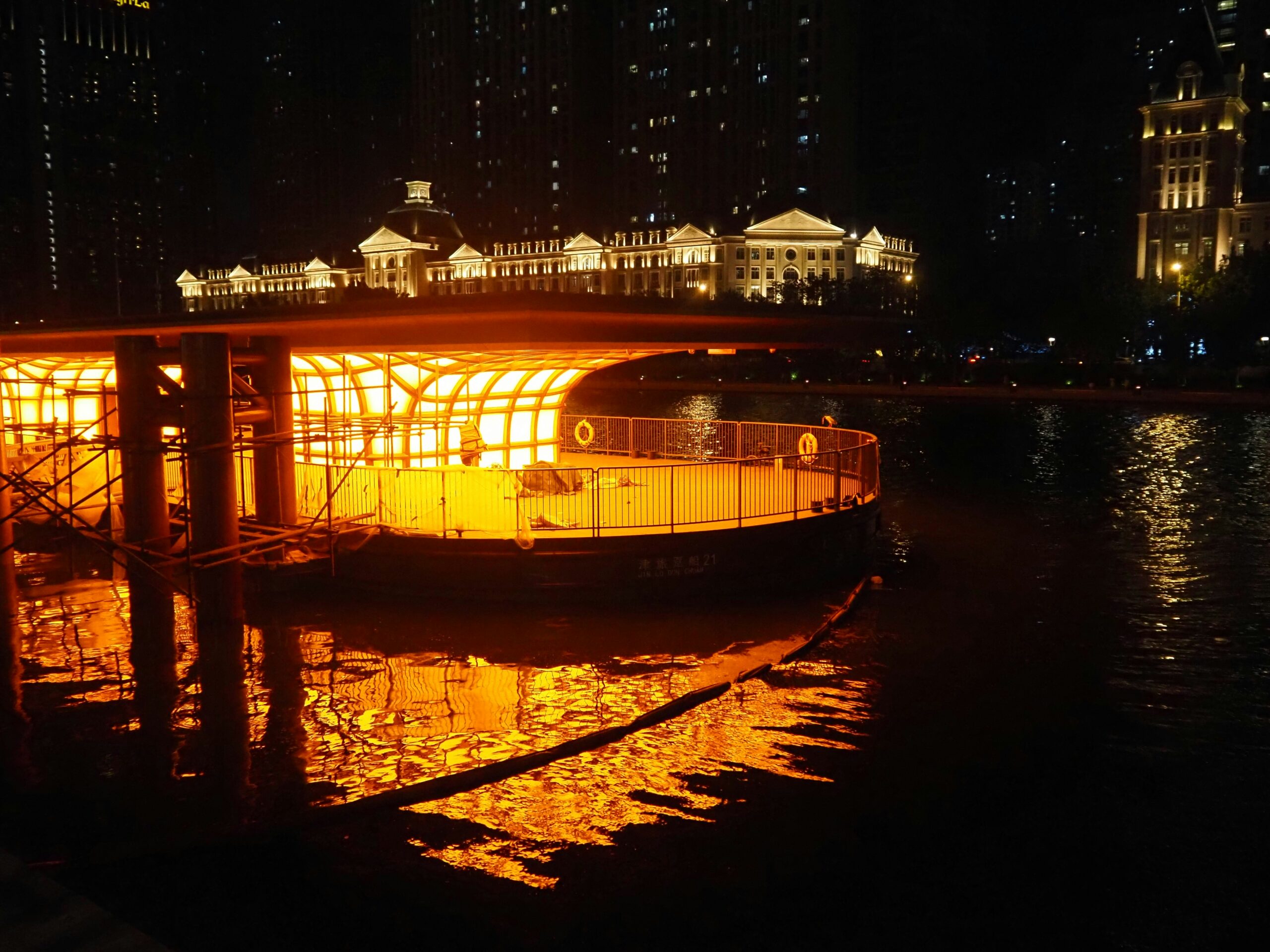
Through the window of the women’s shelter, a ship glides across Lake Ontario, the vessel decked out with lights that skip across the water—glitzy glamour like The Love Boat, that old TV showher parents used to watch on the Classics channel, and Jane (with no idea yet what love could make a person do), imagined herself sailing away on one day.
The metal prow parts surface tension, a hot knife slicing through icing. The ship moans low and throaty like a lover.
She arrived at the shelter in the middle of the night with May and Mandy, ages two and three, both wearing insulated rain boots, wool sweaters, and pink coats. Jane’s hands have yet to stop shaking.
“It’s because of the late November chill,” she says when people comment, faces puckered with worry. They say she’s brave.
Inside the bathroom on the first floor of the shelter, Jane washes her hands. Scrubs hard around the thick bandage on her right palm. Picks at the dark crescents under her nails. She doesn’t meet her own eyes in the mirror; instead, she leans over the toilet and vomits.
***
They’d walked at least an hour before the semi pulled over, Jane’s arms aching from carrying May and Mandy over the ridge and down the embankment to the highway.
“You need help?” the trucker asked, peering at them through the passenger side window.
Words skewered the back of Jane’s throat. Every bone trembled. How long had it been since she talked to another man? She set the girls down.
“Jesus,” the trucker said, eyes widened at Jane’s blood-stained hoodie.
They got into the cab, both girls clutched to her. Stars ticked through the trees as the truck peeled off down the highway to the nearest police station.
Later, the girls wrapped in blankets, Jane choked out what’d happened to the officers: nights chained to a bed, the births, the months and years scratched into a wooden board to keep herself from going insane, and the man. The man. The one who left her alone too long one night, and she jimmied the handcuff lock with a bobby pin concealed alongside her gums.
The police officers made frantic phone calls, wondering what to do with a willow-boned woman like her, clothes streaked with blood, and two little girls, eyes bigger than moons. No identification.
“What’s your last name?” they asked, but syllables collapsed and slid off Jane’s tongue, the before-time a wiped slate.
***
Jane shivers, tugs at the sweater a shelter worker gave her, the knit pilled. She gets up and paces the room. My God, that smell! She can’t shake it.
“It’s okay, it’s okay. You’re safe,” she whispers to herself, the knot of terror in her pelvis easing. Safe in this clapboard house obscured by a thicket of gnarly brush and misshapen Jack Pine, the rooms illuminated with night lights like pinned fireflies.
May and Mandy—babies, really—lie upstairs in a borrowed bed. She tucked them in and sang a lullaby about treetops and wind and cradles falling to the ground, sang until their eyes grew heavy with sleep, and they burrowed beneath blankets, soft arms thrown around each other’s necks, their mingled breath a comfort.
Now, blood seeps through the bandage on her hand. She stares at the glittering magic of The Love Boat drifting past. Diamonds dance across the blue-black water, and she imagines newlyweds whispering in shadowy corners, couples celebrating their twentieth, lone hopefuls with minted breath and sweaty palms. A floating world of love. Desire. Promises made and never broken.
The ship’s narrow corridors must burst with ladies in gold-threaded dresses. Men in pressed suits. Room service trays tucked outside closed doors with Do Not Disturb signs swaying from the knobs. She pictures herself on the deck—yes, she can see it! —gel-tipped nails, hair windswept, a silk scarf coiled about her neck. The shuffle of approaching steps. Broad hands cupping her face. A murmur. A sigh. Moist lips parted.
In the glass, her reflection stares back, and she draws her palms down her cheeks and slender neck.
“You’re still a young woman,” she whispers.
She huffs a breath on the glass, then makes eyes, a nose, a mouth in the mist. Watches the face disappear. Wonders at all the things people do to survive.
***
Daylight glints, lollipop-bright. A new day. Jane clasps her coffee mug, hot enough it prickles. Everyone at the shelter has been so kind.
Across the lake, another ship, gargantuan and grey, lumbers. It takes her breath away—it’s not The Love Boat at all—just a hulking tanker weighted with cement or sugar. The rusty vessel heaves and pushes, marring the raw beauty of the Canadian Shield and shoreline layered with rocks rubbed smooth as bone.
“We see what we want to, don’t we?” she mumbles, then glances around in case anyone heard her.
Waves churn along the shoreline, the steady beat threaded through a cracked-open window. Water hurls forward in a thunderous rage, then sucks back, a squelching sound.
She clasps her hands over her ears—that sound! —then slides the window closed, the squelching muted, but still there.
The years she lived amongst the wild sumac and rocky shores with him and only him—it was beautiful for a while, wasn’t it? Ever since her parents threw her out, she’s needed no one else. A hermit, he called her. But she was happy with only him and their girls. They were happy—or so she thought.
Jane gets up, takes another shower—is this her third? Water steamy, she washes her hands, her face, her limbs.
Toweling off, the decay of algae wafts as she applies a fresh bandage to her palm.
***
May and Mandy sit at the window, pajamaed legs tucked under bums, their bare toes like tiny pink peas. Child-sized binoculars to their eyes, they stare while another ship plods along.
Jane stares at the ugly vessel muscling through whitecaps, her stomach curdling. Isn’t that the problem with the world? Things—people! —pretend to be one thing when they aren’t? She fingers her temple and winces, the spot swollen from where it banged on a mooring. Thank God the dizziness has passed.
Mandy giggles, and Jane tears her gaze from the labouring ship. Spilled Cheerios litter the carpet. Her daughters’ dolls, blank eyes twinned in shock, lay cast on the floor.
Mandy toddles over, plunks herself in Jane’s lap. She points at the ship. “Is that where we’re going?” she whispers.
“No, honey.” Jane draws her in close, and May—never one to miss out on a hug—skips across the room to join them. Jane holds her girls tight, and they sink into her embrace.
“We’re going somewhere much, much better.” She nuzzles her daughters’ silky hair.
The shelter said she can stay as long as she wants, then they’ll help set her up in her own place—maybe a nice two-bedroom if she’s lucky! She’s heard the workers whispering, casting pitying glances her way. To be so brave and survive such horrors! Abuse! Escape! A story ripped from the pages of a bestselling novel. They say she’s a marvel.
May swivels her head and looks at Jane. “What about Daddy?” she whispers.
Jane stares into her daughter’s sky-blue eyes, the same colour as her father’s. Images flash: A raised hand. The silver glint of the cleaver’s blade. That sickening squelch of blood.
“Shhh,” she says. “Remember, it’s a secret.”
A sharp knock on the door; Jane jumps, and her daughters freeze.
“Everything’s fine,” Jane says and untangles herself from their arms.
Outside a police cruiser sits in the driveway. Right. The statement. She’s put it off long enough.
“I’ll take them upstairs,” a worker says, and shuttles the girls away.
“Mommy?” Mandy says, looking over her shoulder.
Jane touches a finger to her lips, then pulls her hand away. “Everything’s fine. I’ll be up soon.”
She opens the door. The officers, eyes solemn, uniforms rustling, follow her into a small, quiet room—perhaps meant for just this purpose—and flip open black notebooks.
Sleeves yanked over her wrists—why can’t she stop shaking!—she answers their careful questions, and they jot down phrases as if they aren’t recording every word and will sort through her sentences later like sifting through weeds.
The officers’ body cams glare at her, and she shivers. Squeezes a pinch of cheek between her back teeth and presses until she tastes the bitter tang of blood.
They take photos of the lump on her temple, the gash on her palm, the scratches on her arms—from the thorn brush she scrambled through, she explains—and photographs her wrists, not a bruise to be found.
“The handcuffs didn’t close right,” she says. “That’s how I escaped.”
They question her about the nights in the woods. About the bottled water and packages of food snuck into a backpack. They ask why she can’t remember her last name. The blood. The blood. They keep asking about the blood.
“He cut his hand…” she says and peels back the bandage on her palm to reveal the jagged gash, “…then slashed mine.” She meets their eyes. “A blood promise that I’d never leave him.”
They scribble, scribble, scribble. Push and poke at the man’s description, his height, his name! The location of the cabin. Any distinctive landmarks.
“It was always dark where he kept us,” she says, chin trembling. “I only knew him by smell.”
At last, the officers sigh with frustration and close their books.
Afternoon tips into evening, a slow descent. She puts the children to bed, kisses their smooth foreheads, then settles by the large window overlooking the lake—the orange glow of sunset caressing her cheeks.
“Here, have some fresh tea to settle your nerves,” a worker with kind eyes offers, and Jane holds the mug, fingers now pink with warmth —but still, that foul smell that won’t wash away.
Across the lake, Not-the-Love-Boat trudges, slower like the beating of her heart. The rusted sides of the ship glint in the lowering sun, and the tanker shifts before her eyes (Is that a peel of laughter? The clink of crystal? A murmur?), and she remembers the strange hang-ups on the cabin’s land line. The sweet aroma of hyacinth on his shirts, even after the bulbs withered and died. His late nights at work, and the nights he didn’t come home at all because he was with her.
Then the night he did come home, and Jane stood, back pressed against the wall, arm raised, anger barreling so hard she couldn’t think straight.
Hands pressed to her breasts, she thinks—for a moment—about the crack of a cleaver hitting bone. The look in his sky-blue eyes when she dragged him, dazed and incoherent, to the dock. The soft clunk of the chain as she tethered him to the piling. The putrid stink of seaweed. The blood—so much blood! His slurred pleas for forgiveness! Because that happens sometimes, right? People break their promises?
Outside, grass stiffens with frost. Soon, a layer of ice will cover the lake, and Jane imagines a sunken body, leaf-curled around the dock’s pilings, pockets weighted with skull-shaped stones. Imagines the mighty power of waves rolling, rolling, rolling, stripping away clothes, hair, the delicate whorls of fingerprints.
It would’ve been easier to take the car when she left—but far, far riskier. No one will find it now. She unscrewed the license plates and dropped them in the section of the lake rife with cattails and pond scum. Drove the old Honda into a thicket of hemlock, and the drooping greenery swallowed the vehicle whole.
Gone.
In the background, her daughters tumble down the stairs, a cacophony of giggles at defying bedtime, and Jane shakes off her dark thoughts. She smooths the hair from her forehead and waits for the stars to sprinkle the sky, hope pooled in her stomach.
The fairy lights of The Love Boat snap on. How they twinkle and shimmer! A new life. The future wide and blue and beautiful.
“Look girls.” Jane grabs their small hands and shoves down the stench that rises from her own. She points to the light show through the window. “See? Isn’t it beautiful? Isn’t it?”