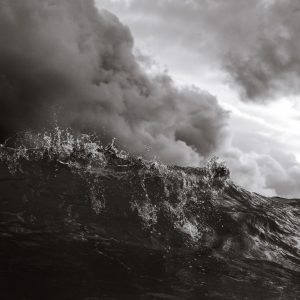
Detective Katrine Holck stirred her coffee three times clockwise, like her mother used to do, and watched the milk bloom into the dark. It was too strong, too bitter. She drank it anyway. Outside her flat, Aalborg scratched itself awake: bike bells, gulls, frost crisp on windowsills. The wind off the Limfjord never stopped. It got into your ears and under your skin. She pulled her wool coat tight and stepped out into it.
The body had surfaced at dawn, face down near the Limfjord Bridge. A jogger and his terrier had found it. The dog barked until its lungs gave out. By the time Katrine arrived, a blue tarp had been pulled over the shape, but the scene still pulled a small, silent crowd. In this city, death was always a public affair, and the living gathered like crows.
Katrine crouched beside the body. Woman. Mid-thirties. Practical boots, scuffed at the toes. A faint ring mark, but no ring. Cold made the body slow to tell its story. Her wrists showed bruising. No defensive wounds. Suicide maybe. But Katrine had an instinct for these things and didn’t think so.
Her stomach twitched. Not from the body, that part of her had gone numb after two years in Homicide. It was the location. Nørresundby. Across the bridge. Home, her old school, her mother’s tiny kitchen, the way the wind never stopped gnawing at your bones. The lure of Aalborg across the fjord. She hadn’t spoken to her mother in four years. Her last visit ended with a slammed door and a bottle of Linie Aquavit tipped down the sink. Her mother believed in modesty, carried an unusual amount of Lutheran guilt, and pretended the feminist movement never happened. Katrine had inherited the guilt, skipped the modesty. She had run to Copenhagen at twenty-two and measured her life by distance and train timetables. But Aalborg has a rope for everyone. It tugs.
‘Name?’ she asked, standing.
‘We think it’s Anne-Louise Kjær,’ said the uniform beside her. Young, red ears, breath smoking. ‘Widow. Husband drowned in the fjord when his boat sank, June. She rented a flat near Boulevarden after.’
‘Who found her?’
‘A jogger. And a dog called Bruno.’
Katrine made a note. The page smelt faintly of herring and diesel. Harbour air gets into everything. She zipped her coat, felt the wind press a flat hand to her chest, and turned to the water. The fjord had skinned itself in the night, thin ice puckered round mooring posts, gulls performing their angry ballet above it.
Widow under ice. Husband lost at sea a year ago. New man on the scene (though that part was untrue). Aalborg always had a story ready before forensics did.
She walked the harbour after, past the warehouses turned into glass apartments and the places that refused to change: smokehouse, knot shop, a café with coffee so strong it polished your teeth. She did not go into Budolfi Church, though she felt the old reflex to sit in the back pew and let the hush do its work. It was Monday, and in this city, Mondays belonged to those who pretended not to need grace.
Tuesday
After she interviewed the jogger who discovered the body and noted nothing suspicious about him, Katrine headed to the victim’s flat. It was two flights up a building that had once stored salt fish and smelled of disinfectant and stale cinnamon. Katrine found a notebook on the table: receipts, harbour names, dates, and odd notations. The walls sweated when the radiators kicked. There was a view of the bridge if you leaned at the kitchen window and ignored the scaffolding.
It was tidy, the kind of tidy you turn to when grief is untidy and has no manners. On the table lay a notebook, squared paper, ruled lines, neat columns. The handwriting was deliberate, numbers in one column, names in another. Katrine skimmed:
Hals, 3/5 – 220L petrol (cash)
Vesterø – ask Jonas about crates (Polen?)
Customs man on leave – Monday nights – receipts missing?
She put the flat of her hand over the page (for a heartbeat only) and pictured a woman sitting here in the bitter hours, making a ledger of suspicions. This wasn’t about grief. This was about getting answers. Or justice. Or revenge.
In a drawer: letters from a sister outside Nørresundby, talk of the farm, of hay mould and loans, of whether she might come back to help ‘for a while’. The neatness of those letters had a different energy: lists of chores, recipe clippings. Beneath them, a psalm book. The pages soft with use. And tucked between them: a receipt from the customs house, two copies of a boat repair invoice, and a scrap torn from a church newsletter with a date circled in ink.
‘You were counting something,’ Katrine murmured. ‘And you found you were not alone.’
When she closed the psalm book, a smear of faint grease stained her thumb, fish or machine oil. She sniffed and decided fish. She washed her hands at the sink, the water banging in the pipes, and stared at her own reflection in the window. Thirty-nine and back where she began. (You can leave; the wind will still know your name.)
Her eye caught something behind a pot plant on the sill. A small flip-phone. The victim’s phone had been found on her, and tech were still drying it out to retrieve information. This looked like a burner phone. There was a missed call to a number. A message to the same number: “You lied. You knew. Call me back.” She took out her phone and rang the station. When switch answered, she asked to be put through to Ove in tech.
‘Yeps,’ he said.
‘Katrine Holck. Can you run this number?’ She reeled it off, and a moment later he said, ‘Mikkel Frederiksen. No ID card registered, which is unusual.’
Damn. Now she’d have to sift through the database for any Mikkel Frederiksens.
That night, in her apartment on Prinsensgade, she ate leverpostej on rye bread sprinkled with roasted, dried onions and flipped through an old, tattered paperback: Sara Blædel, “The Forgotten Girls.” A crutch. Reading other detectives made her feel less alone. At midnight she dozed off on the couch and dreamed of her father’s funeral, where no one cried.
Wednesday
The next morning, at Vestre Fjordpark, she found Johannes on a bench with a thermos, coats layered like bark. He had the permanent squint of men who have looked long at weather. Retired fisherman, belly like a buoy, voice a good rasp. Retired fishermen were an excellent source of gossip.
‘Anne-Louise?’ he said. ‘A good girl. Always had a cake with her to the church fair. You know, proper almond. Not like the town ones. Her man, Jens, he had salt in him. Knew the water. But the day he went out… ah.’ He shook his head.
‘Ah?’ Katrine repeated.
‘Wind looked like a joke, and then it wasn’t. Happens.’
‘You believe that?’
He poured coffee into the thermos lid and considered the steam. ‘Do you want honesty or comfort, Frøken Holck?’
‘Honesty hardly ever arrives in time. I’ll take it now.’
‘He was carrying extra. You hear a thing or you don’t. I heard. Cheap vodka from Poland, cigarettes without tax stamps. Little boats ferrying under fog. Everyone knows someone, ja? But we don’t say. Because the town eats itself fast enough without knives. And because customs like to make a show.’ He sipped. ‘If he wanted out, someone would have a word.’
‘Who?’
He smiled, tired and sly. ‘The harbour tells you if you listen. But you’ve been away. Copenhagen, I’m guessing. You have that big city look about you.’
‘Listening,’ she said, ‘is why I came back.’
He shrugged. ‘His woman, she came around after. Asked questions. Ask the wrong people, you get answers you don’t want.’ He nodded towards the water. ‘You want to know the truth, you’ll get cold.’
‘You know someone called Mikkel Frederiksen?’
His eyes cut sideways at her. ‘Fisherman on Løvbakken.’
Mikkel adjusted crab pots with the solemnity of a surgeon. The rope burns on his hands were as good as a passport. He didn’t like police and did not pretend. ‘Had nothing to do with it. She was imagining things.’
‘So you don’t deny she messaged you?’
He shrugged one shoulder and spat. ‘No point. But like I said, it was all hot air.’ He squatted on the planks, his breath a visible saw. ‘You throw enough hunger into the fjord, it eats a man. That’s the arithmetic.’
She tilted her head, suddenly aware he was speaking about the victim’s husband. ‘So no one sabotaged the boat.’ If this was even a piece of the puzzle, she had a lot of catching up to do.
‘Didn’t say that. Said whoever did it will be fed by the same table as the pastor. Will sing the same songs at Christmas. Will help put up lights for Carnival and ask about your mother. Aalborg is not a city. It’s a long conversation with weather around it.’
‘And the widow?’
‘She loved him. That makes people brave. And stupid. She asked the right people the wrong questions. That always ends in a harbour story. You know this; your face says you grew up here and forgot, and now you’re trying to remember.’
He turned back to his pots.
She sighed. She’d been putting off going to the victim’s sister’s place because it lay close to where her mother lived. Stupid and unprofessional, letting personal feelings get in the way of an investigation.
She borrowed a station car and drove out there. The sister’s farmhouse sat low against the sky and the wind stitched the fields to the horizon. The Jutland soil lay dark, its patience older than language. Katrine arrived mid-afternoon, the light already thinning. A wiry white dog flung itself at the gate with more hope than menace.
The sister, Mette, a beauty sharpened by hard work. Wind-bitten, jaw clenched, hands raw from cold water. She looked like the kind of woman who hadn’t cried in a decade but knew how to kill a chicken with her bare hands.
Katrine had been raised on a farm like this, before they moved into Nørresundby proper. Her father, a stern man with oil-stained fingers, had gone quiet after his bankruptcy. He’d said nothing for three months. Then he walked into the fjord and never came back.
There was a smear of flour on the sister’s cheek. Bread rose in a bowl on the table, a clean tea towel tucked over it like a secret. ‘You could have called,’ she said. Not unfriendly, but not friendly either.
‘I did,’ Katrine said. ‘Twice.’
‘I don’t always pick up. You can’t knead and phone.’
‘Can I come in?’
Mette stepped aside. The kitchen smelled like warm dough and raspberry jam. A calendar with a cow on it offered a square of each month as if that could herd time.
‘You’ve heard?’
‘The harbour has mouths,’ Mette said, and wiped the flour from her face with the back of her wrist, missing most of it. ‘My sister fell into the fjord and didn’t climb out. Is that the story?’
‘It’s a story.’
Mette looked at her, chin high. ‘Then tell me the other.’
‘She was found under ice. She had been keeping a notebook on customs slips, fuel, nights when certain men were home or not. She wrote to you about the farm and money and coming back to help. How much help did she offer?’
Mette’s gaze slid to the bread bowl. ‘We are not rich farmers. People who think we are have not checked the price of feed. She sent a bit when she had it. I sent fruit when it was worth sending. That’s the dance. We managed.’
‘Smuggling’s a way to manage,’ Katrine said, mild as weather. ‘Did she ever question Jens’s death?’
‘She wouldn’t let it go. Said it wasn’t an accident. That he was silenced. You start asking about missing customs records, people get nervous. Didn’t they teach you that in Copenhagen?’
‘How do you know I was in Copenhagen?’
‘You’ve got the pretentious smudge of it when you speak.’
‘In Copenhagen, we learnt to ask our neighbours what they’re hiding.’ Katrine smiled without pleasure, annoyed at being called pretentious. ‘Nothing fancy. Do you have any of your sister’s things? I’ll need to see them.’
‘What is it you’re looking for, exactly?’
‘I’ll know when I see it.’
Mette’s hands fluttered. For a second too long, she didn’t know what to do with them, wipe them again, clench them, conceal them. Then she tucked them into her sleeves like a penitent and said, ‘You can look if you want.’
Katrine found a house full of things that had learned to keep quiet, a sewing machine older than both of them, a drawer where recipe cards were damp around the edges, a shelf of hymnals dried stiff by a radiator. In Mette’s bedside drawer, a photo of her standing in between Anne-Louise and the husband. The photo had a fold in it between Mette and Anne-Louise.
On the back of the pantry door, an envelope, held by a drawing pin that had split the paper. Inside were feed invoices and a handwritten receipt for a tractor belt. The sums did not kiss. Money had been arriving from somewhere that did not have a bank’s name on it.
‘We all survive,’ Mette said from the doorway. ‘We do not ask how our bread is made when we are hungry.’
‘We do when it chokes us,’ Katrine said, and left the envelope as she had found it.
On the way out, in the hall, a coat hung on a peg. On a nail beneath it, a chain, cheap gold. From it dangled a ring. The light from the door caught on it and made a vulgar star.
‘Yours?’ she asked. There had been no mention of a husband.
Mette followed her gaze. ‘My mother’s.’
‘Were you close to your sister’s husband?’
The silence between them felt like a tin roof under hail.
‘We were girls,’ Mette said. ‘We shared everything. Sometimes we still do.’
‘You shared her husband?’ Katrine said. She didn’t keep the pity out of her voice in time.
Mette flushed. ‘It wasn’t like that. Get out,’ she said, and her voice broke in the middle like a twig. ‘You people come and make everything ugly. It was already ugly. We were trying to make it decent.’
Katrine left, the wind tearing tears from her eyes so she could blame the cold.
Back at the station, the forensics report landed. Bruising around the arms as well as the wrists, but no self-defence marks. Water in the lungs, so she was alive when she went into the fjord. No signs of a fall. Katrine sat with her rye bread sandwich, mouth dry. Her therapist said she compartmentalised like a magician. Her last boyfriend said she was more interested in corpses than conversation.
She threw the rest of the rye in the bin, grabbed her coat, and headed to Pathology.
‘She was pushed. Held under by someone she knew,’ the pathologist said through a mask. ‘Someone who could get close enough to say sorry as they did it.’
Or someone who wanted to hold her while she struggled. Because that’s what people sometimes call love. She pictured hands pushing a head, a body, under ice. Imagining a murder is one of the ways you get near it without drowning.
At the customs office, a clerk with peppermint tea and a love of procedure pretended not to recognise her from school. He also pretended not to care that she now wore a badge.
‘We’ve had chatter for a while,’ he said, flicking a biro like a metronome. ‘Small boats ferrying in from Latvia and Poland. They come in heavier than they should and leave lighter. If you ask anyone, they’ll say it’s legal because it’s them doing it. They always say that.’
‘Any accidents on record?’
‘Three small boats down in the last year. One in fjord between Aalborg and Nørresundby returning from Hals. That was the widow’s husband. Unusual because accidents in the fjord are rare. fThey almost always happen out at sea. Someone keeps filing fuel invoices on Sundays, which is either devotion or fraud. Your widow was in here two weeks ago. Wanted to know whether she could see copies of inspection logs. I told her no unless she had a lawyer, which she did not. She said she had a priest, which was charming but administratively useless.’
He leaned in, and his peppermint breath fogged the glass between them.
‘We don’t talk about it, because everyone knows someone, but the ferry doesn’t just bring tourists. The money goes somewhere. Often to nowhere honest.’
‘Often to fishermen?’ Katrine asked.
The clerk held out his hands as if apologising for the weather. ‘The answer is I don’t want to put myself at risk, so no.’
Thursday
Back at Anne-Louise’s flat, Katrine sat at the table and read the notebook from the beginning this time, whispering the dates like rosary beads. The entries became a rhythm: fuel, repairs, the names of small harbours where a man might come in late and unobserved. In the margin next to one date in June, Anne-Louise had drawn a tiny boat, childish, sails like triangles. A woman’s joke to herself when nobody else was laughing.
She opened the psalm book again, carefully leafing through every page. Beneath Psalm Thirty-Seven she found an address pencilled lightly: Strandvejen 12, Monday 22:30 – talk to M. The M was looped in a way you copied from school copybooks and never quite stopped using. Katrine knew that loop. She had once used it herself, writing her middle name, Marie, in blue ink on exercise books while her mother smoked in the kitchen and the wind did its work on the windows.
She went to Strandvejen as the light dropped and the fjord tugged at the tide. The address was a bench looking at the water. A bench could be an address. A gull had torn a sandwich wrapper to a clean skeleton and left it arranged neatly on the slats, as if to say: I too keep records.
She sat until her thighs numbed and the sky bruised and nobody came. But the cold bit something loose in her thinking, and when she stood, she knew which door to knock.
Katrine went to Budolphi church where she found the pastor straightening hymnals. He had the face of a man who spent a lot of time telling other people it was not their fault when it very likely was.
‘Anne-Louise came in late sometimes,’ he said. ‘Sat at the back. Didn’t want me to pray for her.’
‘Do remember any particular conversations you had with her, anything that seemed odd or stood out.’
He pursed his lips, tapping fingers on his left thigh. ‘Last time she asked me if I knew what Psalm Thirty-Seven meant by not fretting because of evildoers, and I told her.’
‘Did she say who the evildoers were?’
‘She said she was tired of the word accident. She said it the way one says spoiled milk.’
So this definitely had to do with the husband, and his death had not been an accident. She smiled at the pastor. ‘Thank you. You’ve been most helpful.’
He nodded graciously and turned back to his hymnals.
When she reached the door, she turned. ‘Did you notice her wedding ring recently?’
‘It’s gone?’
Katrine nodded.
‘Some widows take them off because the echo hurts. Some keep them on because the echo helps. I didn’t see her without it. It was her mother’s before it was hers. Lovely woman, her mother. Shame she married that pig.’
She tried not to let her shock at his word choice show and stepped out the door. She pulled out her phone, calling the station to book a car.
Mette opened the door with bread flour on her wrists, the second loaf made and cooling on the rack. Her eyes were rimmed red in the way they are when you have not slept or have slept too much from not wanting to be awake.
‘I’ve a warrant,’ Katrine said, and held it up so Mette could read if she wished to pretend she had a choice.
‘The dog will bark,’ Mette said.
‘Let him.’
Katrine went straight to the ring on the chain. A dent on the inner band where a goldsmith had made a cheaper ring look generous. A scratch no one would notice except the woman who wore it every day and occasionally ran a thumbnail there while thinking.
‘She gave it to me,’ Mette said from the doorway. ‘After the funeral. She couldn’t stand the weight of it. She said it was bruised.’
‘She died with a ringmark,’ Katrine said. ‘Your excuse has a trapdoor. If she’d given it to you then, the ringmark would have faded.’
Mette took a step forward and stopped herself. ‘I told her to stop. She said she wanted the truth. That we owed Jens that. I said no one owed anyone anything anymore. I did not… I didn’t mean… I wanted it to go away. All that asking. She had no gift for stopping when stopping would save her. She wrote and counted and poked. It was going to ruin us both.’
‘You met her by the water.’
‘She wanted to look at the place where he went in. It was foolish. She said she could see answers on the surface if she looked right. Like oil. She took off her gloves, and her fingers were white with cold and I tucked her hair behind her ear because it was in her mouth. She was always doing that–getting hair in her mouth when it blew–and then I thought, I could hold her, I could keep her from hurting herself with questions. I thought about it and then I did it. She went under so easily. It wasn’t like the films. It was quiet and ugly. I wanted to pull her out again. But I… I didn’t.’
She had not cried yet. Now she did, a noise like something pulling on a branch until it cracked. Katrine waited. The wind found a gap in the wall and made a whistle. The dog barked once and then reconsidered loyalty.
‘We were two girls once,’ Mette said. ‘We wore each other’s clothes and kissed our hands and said that’s how husbands feel, probably. We took the bus to Aalborg and bought hot dogs and pretended not to be country. We had a plan without money. She thought I was clever. I thought she was brave. And then life asked for its tax. I found the clever, she found the brave. You see where that ends.’
Katrine nodded. ‘In a kitchen with bread cooling and a ring on a chain.’
‘That’s unkind.’
‘It’s inventory.’
When she arrested her–gentle hand on an elbow, the way you help someone down off a high chair–the dog did not bark. Mette looked at the loaf as if it might be the last warm thing that would forgive her.
‘Who cut the boat’s lines?’ Katrine asked as she led her out.
‘You could call it the weather,’ Mette said, and smiled with one corner of her mouth in a way that said she had decided to keep one thing for herself. ‘Or you could ask Mikkel, who never saw anything he didn’t see.’
‘And the money?’
‘It passed through the farm the way water passes through soil. It left traces if you know how to look. You will look. You always do. That is what you people are for.’
‘Did you pay Mikkel to sink the boat?’
Mette snorted. ‘Please. That is beneath you. Jens got himself in a Latvian sandwich, if you know what I mean. His one great act of kindness was to not make me the beetroot in it.’
‘And why take the ring?’ Katrine said, pausing by the door.
Mette lifted her chin, and her voice went flat. ‘What do you want me to say? That I wore it to remember we were the same size once?’
Katrine remembered the fold in the photo in Mette’s bedside drawer, the one that cut Anne-Louise out of the picture.
The report read: Murder. Suspect in custody. Motive: Fear of exposure. Complicity in laundering money tied to smuggling. Victim threatened to go to the authorities.
But Katrine knew better. It was love. Corrupted. Grief that festered. Coveting a sister’s husband.
That night, Katrine lit a candle in Budolfi Church, for her father, for Anne-Louise, for the thousand women who went under quietly. And she didn’t call her mother. Not yet. But she had the number in her phone. It was something.