By Caitlin Taylor So
We at Uncharted were excited to reconnect with Emily O’Malley Liu who previously won second place in our 2022 Novel Excerpt Contest with her short story “Roses.”
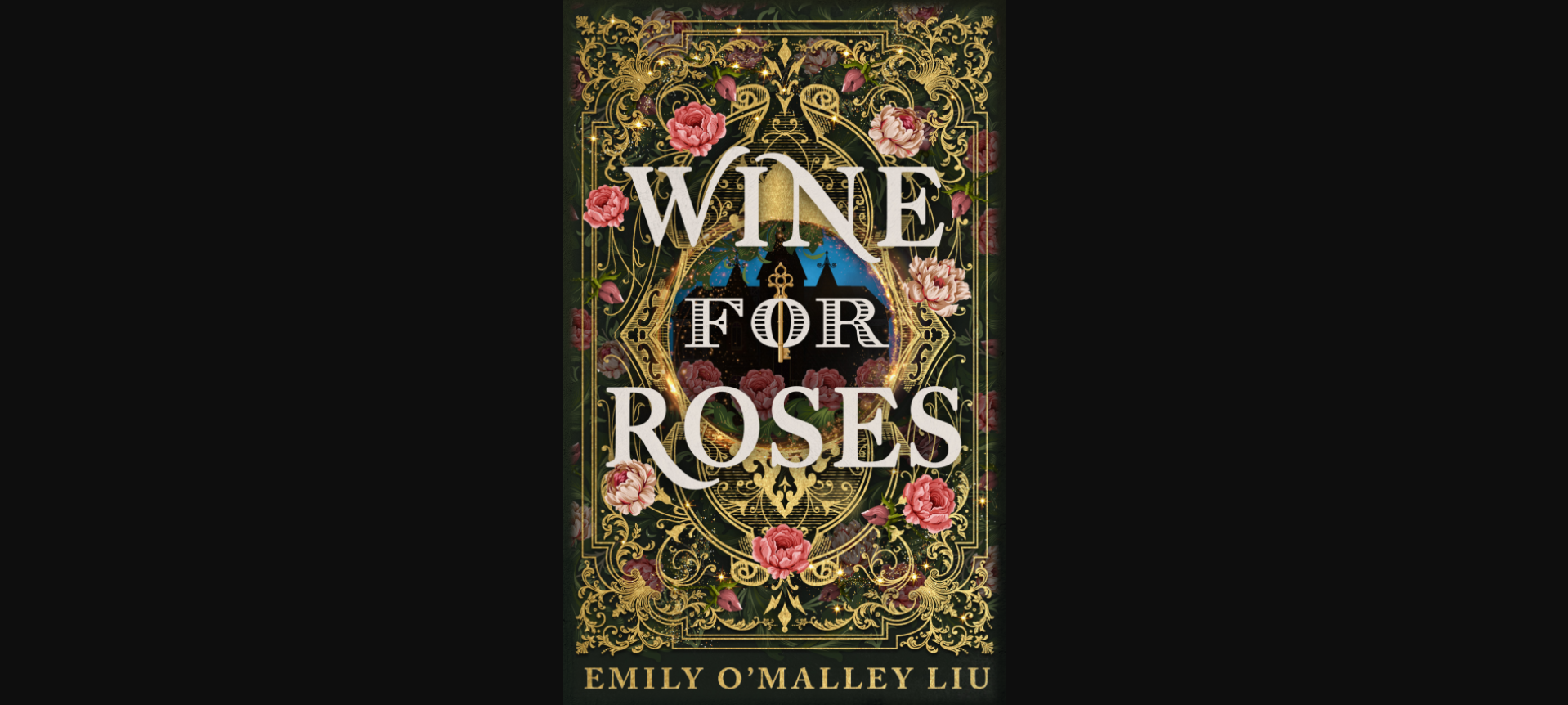
We’re honored to have featured this excerpt as Emily’s story has since been picked up by Shiraki Press and will be coming out on April 14, 2026 as a debut novella titled Wine for Roses!
Ethan Keating Mendoza — the son of a hedge witch and his father’s rose-growing business partner — has been hired to tend the wild and overgrown Kilbride estate. There he meets Louis, the peculiar trustee of the property, who’s under a bloodthirsty curse that binds him to the garden. As the men grow closer, the more desperate Ethan becomes to save his love and the tighter the garden’s grip gets around them both.
Before Wine for Roses comes out this spring, be sure to read Emily’s winning excerpt “Roses” right here on Uncharted and our interview with Emily down below!
CAITLIN TAYLOR SO: Your short story “Roses” won 2nd Place in the Uncharted Novel Excerpt Contest. Where did inspiration for this story and these characters first come from?
EMILY O’MALLEY LIU: I came across the term “rose rustler” in a gardening book, and the first line of the story (“My father was a rose rustler…”) popped into my head. I’m a discovery writer, at least on a first draft, and it became clear very quickly that this was some sort of Beauty and the Beast retelling. Because of that first line, the story was also always going to be written in first person, and Ethan was pretty well-developed, as a character, from the beginning. It was easy to get into his head. Figuring out Louis was harder. He was always doing odd things like sprawling around on the floor with a book. He’s a bit of a weirdo.
CTS: Can you tell me more about your writing process developing “Roses” into your novella Wine for Roses coming out April 14, 2026 with Shiraki Press? When in the process did you begin submitting to small presses and publishing houses? What about Shiraki Press excited you the most?
EOL: I had originally envisioned “Roses” as a longer novel, but I received some early feedback that the pacing wasn’t working quite right. The structure really fell into place when I cut it down to its current length, and at that point, I submitted it to several places that were accepting novellas.
I love Shiraki Press’ focus on hopeful fiction — what they call “hopepunk.” I think most people read fiction for an escape, but I’ve never enjoyed downers or sad endings (though lately I’ve been gaining an appreciation for horror). Working with the folks at Shiraki has been incredible. They really understood my vision for the story, which I think is one of the advantages of working with a small press. They’re so dedicated to every project. I went through several rounds of editing with Brianne Shiraki, the managing editor, and we got the story to the best possible version of itself, which is the best possible outcome.
CTS: How did you end up with the final title Wine for Roses? What were some other possibilities and what made Wine for Roses the best one?
EOL: Josh Sutphin at Shiraki Press came up with the title! Josh is the principal designer at Shiraki, and I worked closely with him while we were envisioning the cover (the final cover art was done by Lisa Marie Pompilio of Von Brooklyn Design).
Roses was my working title, but I had submitted the manuscript to Shiraki as The Man in the Garden House, which was…fine. It never excited me. My agent and I had a few meetings with Shiraki to brainstorm possible titles. When Josh suggested Wine for Roses, I was dumbfounded. The phrase shows up repeatedly in the text, yet I had never thought about using it as a title. There was no more brainstorming after that. It’s just perfect.
CTS: Can you tell us more about what querying for an agent was like for you? What type of agent did you have in mind and how did meeting Gabrielle Harbowy of Corvisiero Literary align with what you were looking for?
EOL: I had a contract in hand when I queried my novella, so the process was a bit more straightforward for me (but I’ve been in querying trenches before, it’s rough!). I wanted someone who could help guide my career over the long term and who represented both fantasy and science fiction.
I knew Gabrielle was a fit right away. I felt completely at ease talking with her, and I loved her focus on championing stories with disabled main characters. Like the main character in Wine for Roses, I have a chronic illness, and when I was first diagnosed, I mostly felt really lonely. There were very few touchstones in my favorite stories that I could point to and say to myself, see? They understand. They lived this and still have a story to tell.
CTS: What other romantic fantasy stories would you compare Wine for Roses to? What are some of your personal favorites?
EOL: I keep coming back to Emily Tesh’s Silver in the Wood as a comp. Like Wine for Roses, it’s a queer romantic novella with fairytale vibes. It’s very sweet.
CTS: Looking back, if you could give any advice to yourself as you were first writing “Roses,” the short story, what advice would you give? Did everything that happened after happen exactly as you had envisioned it? Would you have done anything differently?
EOL: It took a really long time to get this book into its final shape. I began the first draft in the early months of the pandemic (I had a newborn, so I was writing in twenty minute sprints while he napped). The excerpt won 2nd place in the Uncharted concert in 2022. The final novella was accepted by Shiraki in 2025. I might wish that I had understood that it was meant to be a novella earlier, but it also worked out so well, I really can’t regret anything.
CTS: What can readers expect from you next after Wine for Roses? How has this experience prepared or informed your approach for your second novel?
EOL: I actually consider myself primarily a science fiction writer, despite my love for fairytales. I’m currently working on a futuristic novel that takes place on a space station, in a post geopolitically fragmented world. I used to work in economic research, and broad questions about socioeconomic systems fascinate me.
There’s a lot of influence from Ursula K. LeGuin. It’s a much longer novel than Wine for Roses, and the world is so much bigger. I find worldbuilding intimidating. But the biggest thing I learned from working on Wine for Roses is just to keep going. If you keep writing, it all starts to feel real after a while.
***
Emily O’Malley Liu grew up in Palm Beach County, Florida and has lived in the American Southwest, the Midwest, New England, and Japan. Em now resides with her husband and three kids in the greater Washington, D.C. metro area, where she researches financial systems by day and devises magic systems by night. Wine for Roses is her first novel.
To learn more, follow her on Instagram and visit her website: https://emilyomalleyliu.com/.
Born and raised in Queens, Caitlin Taylor So is a Chinese-Vietnamese writer who is passionate about prioritizing and amplifying marginalized voices. She graduated from Emerson College with a degree in publishing and marketing. Her writing can be found on Business Insider, PopSugar, WebMD, Medscape, The New Absurdist, and Her Campus Media.