This home has everything a civilised person could want, but that stopped being a consolation long ago.
With my wheelchair sideways, I twist to reach into the butler’s sink. Grasp the crystal tumbler. A wipe with the tea towel, then lift it up to the light. The cut glass is good at hiding errant drips, but I’m better at finding them.
I’ve been here for… far too long if you ask me. Admittedly, the facilities are first-rate. High, corniced ceilings and four-poster beds. A roll top bathtub (although it’s far too hot to bathe, and a hoist is noticeably lacking). A billiard table in the cedar-scented library (which might be more enlivening if there were any competitors). And, of course, the abundant garden (not that I can make it past the patio).
It’s nothing like that poky little flat Amanda found with its scrubby grass verges and mossy brown brick. ‘Sheltered accommodation’ it might have been, but the residents’ committee were loath to accommodate any of my suggestions. The front door stuck when it rained – and when didn’t it rain?
In comparison, this home is a paradise, but for one thing. Here, there is no front door – sticking or otherwise. In fact, there are no openings of any kind on that side of the building. All the windows crowd around the garden.
The sink is empty, the counter full. Time to wheel to the orangery to make the most of the morning sun before the heat becomes oppressive. It’s not until I position myself by the arched window that I notice the tea towel is still draped over my knees. My comfort blanket.
The garden is a barricade of plants: nasturtiums and pansies, hollyhocks and foxgloves, dog roses and gorse shrubs, vivid rhododendrons and tropical bougainvillea, blooming all at once and all the time. Behind them, a battalion of tree trunks musters on the steep slope, blocking the view beyond. A slope that may as well be a cliff face with these damn legs of mine.
There’s another thing I hesitate to mention. While I’ve never been overly sociable, nor do I like to be entirely alone, as I am here. An hour a day with Gregory hardly counts.
Besides, after this morning, I don’t know if he’s coming back.
Usually, nothing changes here, not even the weather. In this unceasing summer, every day is the same, and every day Gregory leaves. He’s always returned before, but this time was different, crueler. Why was I so cruel?
###
Doing the same things again and again makes it easy to forget yourself. There I sat, drying my hands on a tea towel, like on thousands of previous occasions. This time, humming Chopin’s Nocturne in E-flat major.
Looking down at the red-checked fabric, I pictured those hands alighting on the piano keys. Delicate fingers with manicured nails and flawless skin. But the towel slipped, revealing knuckles thickened with arthritis, cracks and splinters where there should be polish, and blue veins projecting from translucent skin strewn with mottled age spots.
It was then that I realised I had let days, weeks, years go by without remembering to be angry. Well, I was angry now.
###
Time to add lemon and sugar to the pot for my afternoon iced tea. Prepare a sandwich. Wash up once more. But the 10 yards along the corridor feel like 10 miles. Hunger and even thirst rarely register here, and if I were so minded, I could leave cleaning to whoever tidies overnight. But my routines fill the hours till Gregory returns. Only, if he’s not coming back, what’s the point?
How ridiculous it is to miss him. When one reaches a certain age, one’s peers tend to develop deficiencies, and Gregory has his fair share, with his wandering about. Mentally as well as physically. Eventually, he was bound to overstretch my patience.
Still, I wish I could return to yesterday evening. The lingering sun pooling on the parquet floor as I made my way upstairs. Sliding from my chair to the third step, using my good arm to push myself up and back onto the fourth, lifting one foot and then the other. Repeat, repeat, repeat. (Lord knows why it never crossed the developers’ minds to pop in a chairlift.) Then, crawling, elbows dug into the red carpet runner. Finally, clambering on to my bed and submitting to a dreamless sleep.
This morning, too, everything was as expected. The crushed-petal scent of the garden drifting through the sash window, a new blouse and slacks draped over the wingback chair, and a fresh glass of water on the nightstand.
I’ve learned to call out quickly. “Gregory? Help me to get downstairs.”
In he came, mouth open and staring. I shooed him into a corner so I could dress, persevering with the uncooperative buttons, then winding and pinning my hair. It’s amazing what can be achieved with the right attitude, though you wouldn’t know it to look at Gregory – his hair is untouched by a comb.
“Let’s eat before you go.”
Gregory’s head snapped around. “Go where?”
“Nowhere. But do have some breakfast.”
He bent to let me place my arm across his shoulders, then straightened, helping me to my feet.
Gregory has the physique of a rower. As a young man, he would have been strong enough to carry me across a threshold – not that I think of him that way. Heavens no. In any case, he is long past such feats of masculinity, so I shuffled as he dragged.
The previous day’s washing up had been returned to the cupboards as usual, so I instructed Gregory to fetch cups and glasses, pans and plates, while I assessed the fresh supplies in the fridge. Leaving the tea to brew, I wheeled to the range cooker. Toasting bread and crumpets on the grill, frying bacon, eggs, and mushrooms on the hob.
“Shouldn’t I…?” His wavering hand failed to inspire confidence.
“You should lay the table – and don’t forget the napkins this time.”
I persuaded Gregory to have seconds and thirds. To sustain him, yes, but also to prolong his presence.
“What’s wrong with you?” As usual, he was full of questions. “What is this place? Where are we?”
Instead of replying, I replenished his orange juice. Experience had taught me that the truth would send him rushing off. But saying nothing would achieve the same result, and asking questions in return would succeed only in revealing his ignorance of himself.
Nevertheless, the third time he chewed, swallowed, and said, “Why are we here?”, I had to admit, “I don’t know.”
There are no answers in the home or the garden, and Gregory is unable to communicate what lies beyond.
“We’re trapped?” he asked.
“It seems so.”
Gregory glanced at the leaded window, the crisscross metal shackling the blue sky. “I’ll find a way out.”
Ordinarily, he loads a torch, a knife, and a whistle into a knapsack – and, at my insistence, water, sandwiches, and an apple from the fruit bowl. As I follow him dutifully to the patio, he coils a length of rope and says, “Don’t worry. I’ll come back for you.” Trampling the blooms beneath his boots, he climbs out of sight.
Each day is a repeat of the last – da capo al coda, but in the sheet music of my life, the coda never comes. There is no end to one movement nor beginning of the next, only the same bars of music over and over. It would be enough to drive a lesser person quite insane.
“I should go.” Gregory stood, playing the hero as ever. But the motif had worn thin.
Why couldn’t he stay put for once? It wasn’t as if his working limbs got him very far. I scraped butter onto cold toast, crumbs spraying like water from a sprinkler. “Calm yourself, Gregory.”
Ah, that was the moment when it all went wrong.
“My name is not Gregory.”
Well, of course not, but he needed a name, so I gave him one. “What is it then: are you the Adam to my Eve? Is it Benjamin, Clive? Shall we proceed through the alphabet till something rings a bell?”
He shrank back, the creases on his forehead deepening.
“You can’t remember, can you? You can’t remember anything or do anything, you useless old fool.”
Gregory’s tears made him seem far younger than his eight or so decades. He left without taking the knapsack, without a sip of water or a gentle word, without saying he would come back for me.
It shouldn’t matter. It’s not as if he returns while I’m awake – or remembers why he’s returned once he does. But his promise gives me something to wait for.
All day I’ve waited, alternating between the orangery and the canvas parasol on the patio. But now the heat has forced me to take refuge in the library, seeking diversion where none exists. I’ve read every book within reach at least twice, so I’m reduced to spinning the billiard balls across the baize.
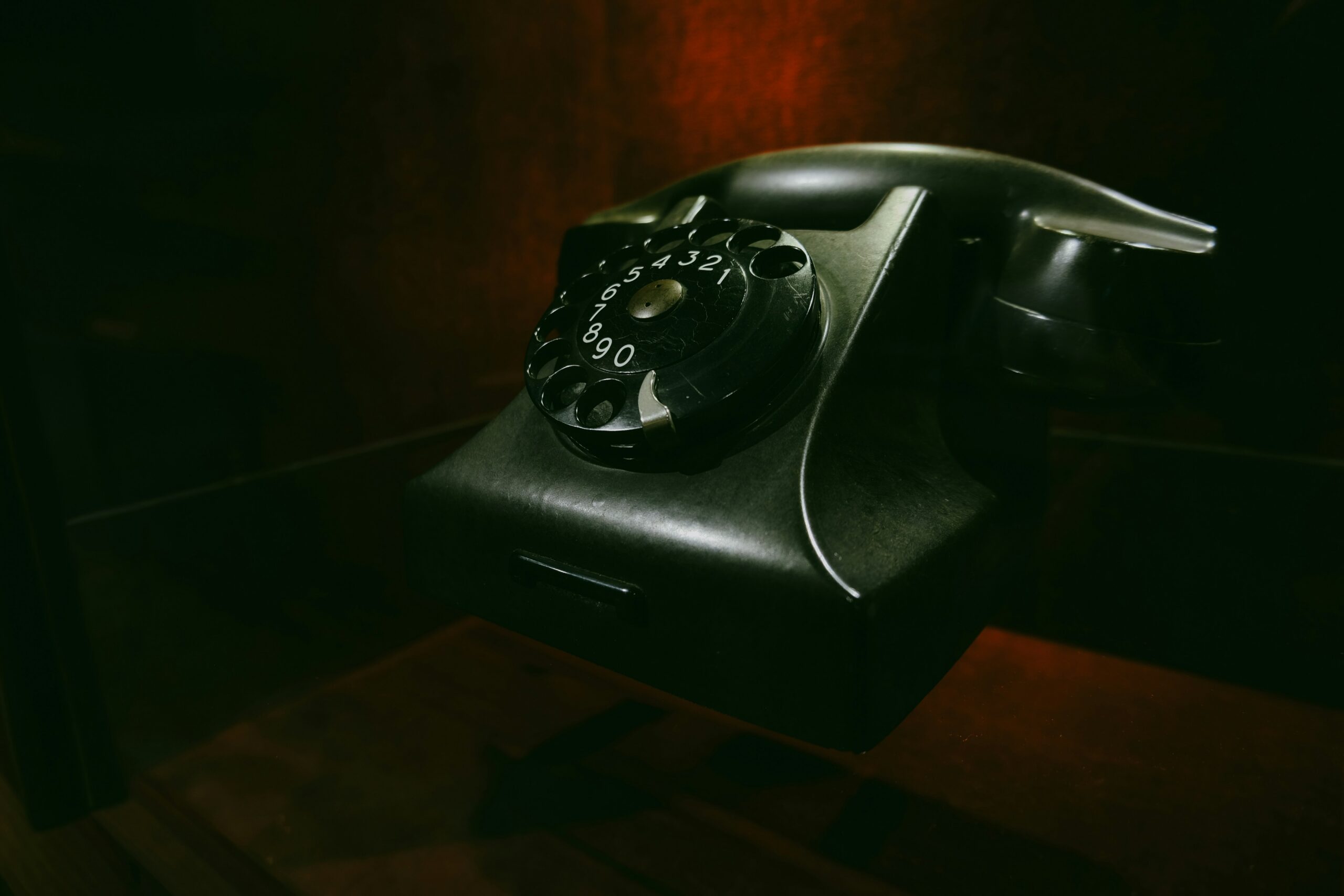
I used to leave notes for whoever came at night – “If the manager would kindly make themselves known…” – but while the messages disappeared, nobody came. I used to check the rotary phone in the hallway at hourly intervals, but there was never a dialing tone. I used to scour the walls for a hidden opening, a passage. Airless afternoons spent peeling back paper, hacking at plaster, mauling picture frames and light fittings. But the search was fruitless, and by the next morning, order would be restored.
So now I wait and reminisce. It’s Gregory’s misfortune to forget, mine to remember.
###
Amanda grasped my finger as if it were her flesh to command. She held tight with her cries, too, and her gaze once her eyes could focus, and her ears as she absorbed everything I had to teach.
I was her world. Her domineering needs seemed destined to last forever, a prospect I dreaded and yearned for in equal measure.
When she learned to sit, she balanced on my lap as I played Bach and Mozart – or, if a romantic mood struck, Debussy and Liszt. Tangerine shampoo in my nostrils, tiny hands resting on mine.
Later, she clutched my hand, toddling from table to sofa, room to room. But she was so fragile. Every sharp corner a hazard, every hot drink a gratuitous risk. Now I held tight, but she squirmed free, directing her attention over my shoulder or around my legs. Gripping my fingers, she tugged us towards death-trap climbing frames, hazardous roads, and contagious brats.
Later, she withdrew her hand, no longer listening, always telling. “Wait”, I said, and “Another time,” and “Not yet.” My attentiveness sprang from self-preservation rather than maternal instinct. I had been Amanda’s world. Now she became mine. I would die without her. More than that, I would never have existed. I would be an unperson, as erasable as the water stains she left on the shower screen, the mud she trod into the carpets.
The piano sat unplayed. There was far too much to do.
###
Already the ice cubes are a memory, a mere suggestion of coolness, although I refilled my iced tea only minutes ago. It’s too hot to eat, think, or do anything but sit in a daze in the stained-glass silence of the library, waiting for the evening breeze to signal I should go to my room.
However late I stay awake, there’s never any sign of Gregory, of anyone, and when the sun sets, shadows spread like black mould. Weeks ago, months perhaps, I almost fell on the stairs. So I tend to retire early to hasten the moment when Gregory will wander into my room as surprised as if it were our first meeting.
An imperfect companion he may be, but those snatched moments are all I have. His ribs expanding against mine as we walk along the corridor. The minutes at breakfast when his mouth is so full that his questions cease, and my mind stills.
Have I lost that respite? If his anger keeps him away all night, will he forget there’s someone to come back for? He might even find the exit and leave for good.
Knowing his whereabouts would enable me to formulate a plan. Somehow follow him or send a message. Like that summer when Amanda made dozens of paper planes and launched them from the first floor. They littered the lawn as if an electrical storm had struck down a flock of white doves.
Looking back is no use. I must go forwards, or rather upwards. Surely I could glimpse Gregory from my bedroom window.
At first, I see only the copious canopy and a haze of condensation. Then a grey ribbon solidifies at the crest of the hill. A wall? I need to get higher still.
The second staircase is precipitous, with a hatch at the top. Pushing, pulling, grabbing, I make painful progress. The attic is like an oven – one coated in filth. Dust invades my lungs, and the effort of breathing makes the blackness close in. Blinking leaves a fizzing halo around the edge of my vision.
It takes all my strength to grip the frame of the skylight and stand, but it’s worth the effort. The meandering grey line is a wall, and atop it, blurs of colour stand at irregular intervals. Blurs shaped like people.
We are not alone. The realisation barrels through the room, knocking my legs from under me. The blackness takes over before I hit the ground.
###
I held Amanda with my tears. For a time.
“Leave it out, Mum,” she said, at last, hefting an overstuffed holdall and dragging a suitcase. “A whole world out there and you can’t bear for me to enjoy it.”
When she shut the door, I sat on the stairs, tea towel in hand, watching the eddies of dust in the light streaming through the transom window.
Amanda moving out was a crushing diminuendo. But I carried on. Going from one payroll job to another, though colleagues who gossiped by the filing cabinet were promoted while my flawless record-keeping earned me nothing but my own satisfaction. Going on dates with men 10 years older and 3 stone heavier, who regarded me with curled-lip disapproval. Going slowly around the bend.
There were pizzicato moments of joy when Amanda called or sent flowers for my birthday. Or that Christmas when she brought a boyfriend. (Rick was it or Mike?) His capacious laughter carried everyone through dinner. Afterwards, he offered to tidy up. But I shooed them from the kitchen and switched on Classic FM. My fingers twitched inside the Marigolds, echoing the notes as I scrubbed the roasting pan.
The boyfriend didn’t last, and nor did our brittle harmony.
I still hoped Amanda might return for good. But she changed too much, or I changed too little. When she finally moved closer, she’d never felt further away.
After my second fall, Amanda took care of the house, power of attorney, all of it. But she never sat by my bed for long. When I pressed the point, she fidgeted in the wipe-clean chair and sorted through her handbag, preferring to look at stubby lipsticks and threadbare tissues rather than her own mother.
There was no room for my piano in the new flat, and I hadn’t played properly in years. Nevertheless, it was a wrench.
None of that would have mattered if Amanda had been less stubborn. But she would not be my little girl, even for a moment. Sometimes, I let my nails grow long, so she would hold my hands to cut them.
###
Moulded plaster fruit above, Egyptian cotton sheets below. I’m in bed, but how? Did the staff carry me here and undress me? (I will have words with the manager if they ever make an appearance.)
As yesterday’s events replay, panic thuds through me. “Gregory?” No answer. He’s gone. Never to return.
At the creak of floorboards, relief surges. Another chance. I ought to apologise but it would mean nothing to him. It’s more important to take charge.
“Gregory, come here at once.”
He stumbles in, clueless as ever. After I explain my plan, he says, “But shouldn’t I…?”
“No, you shouldn’t.” I won’t let him leave me behind again.
Soon after, we’re on the patio, ready to leave. Hugging the knapsack, I sit in the wheelbarrow tray, which we’ve removed from its frame and bound with rope. Gregory braces the loose end of the rope across his torso, ties it around his waist, and climbs. After a tense pause, the tray progresses in his wake.
This mode of transport is heavy going and, more than once, we’re forced to detour around rocky crags. Swathes of umber and ochre among the green. Any attempt to spot the home and garden makes my head seesaw with vertigo.
We rushed breakfast, so I convinced Gregory to stop for an early lunch. After wedging the wheelbarrow against a tree trunk, he sits on a log. The undergrowth rustles. Leaf-heavy branches throw flickering shadows onto the forest floor. Despite this shade, the air is stifling.
Gregory devours his ham and pickle sandwich, while I pick at my salmon and cream cheese. With food to focus on, he’s content. But when he finishes, he looks over at me, then down, his sturdy shoulders sagging.
“What is the matter?” Why is it that needing someone makes it so hard to be kind? I try again. “Don’t worry, we’ll do it together.”
“That’s just it. You’ve been so good to me, but I’m afraid I’ve forgotten your name.”
Pins and needles skitter over my scalp. “It’s not important.” I busy myself with the knapsack, putting my half-eaten sandwich away.
Of course, Gregory can’t remember my name, but what shocks me is that nor can I. “Hand over the canteen, there’s a good chap.”
Filling the emptiness with words might prevent it from engulfing us, but I struggle to speak. As we continue, there’s nothing but the trudge of Gregory’s boots and the rattle and crunch of the wheelbarrow tray.
###
Was I a bad mother? Or perhaps I did the job too well. Amanda became an independent woman, high up in that charity of hers. Too important in far too many lives to spend an hour with me.
I had talent once, too, but put aside my ambitions for her, only to discover that sacrifice is rarely twinned with reward.
After my stroke, Amanda talked of nursing homes, stacking the leaflets next to the jug of tepid squash on the wheelable table. “This one sounds perfect.”
The thin hospital pillow puffed out the sherbet smell of cheap detergent as I turned my head from her, willing my obstinate body to do the same.
“Apparently, it’s a ‘cutting-edge facility that offers an Eden in the Cloud’.”
I thought, “You’re trying to get rid of me.” But my mouth wouldn’t form the words. And yet, I must have agreed because I woke up in the home.
###
Gregory stops in a clearing, the wall mere feet from us. I follow the line of his gaze up to where the dimpled grey stone meets the unblemished sky.
The only guard in sight is a fair distance off, stationed to prevent our escape. Yet I can’t see skin, only white hair – they’re facing outwards. A suspicion shoots through my mind, trailing a throbbing headache behind it: are the guards meant to protect us? Could whatever lies outside the wall be worse than the tedium of living inside?
Gregory drags the wheelbarrow to the nearest staircase and shrugs off the rope. “Stay here while I scout ahead.”
I’ve had enough of waiting for him, but it’s all I can do to press the knapsack into his hands before he is gone.
Hours pass. My voice grows hoarse from calling out. The shadow cast by the wall is a warning of the night to come. Then a slithering hiss in the undergrowth makes me jump, and the wheelbarrow tray tips, depositing me onto the filthy ground.
I can’t dither a moment longer.
The stairs are slippery with moss, but my evening routine has prepared me for the climb. At the top, a high parapet prevents me from seeing over the wall. If I could stand, the stone would be at chest height, but the surface is too smooth for me to gain purchase. Nothing for it but to crawl. Left. No, right.
My hands are raw by the time I see Gregory. He’s facing away from me in the slanted sunlight, one leg raised, palms pressing on the parapet as if he were about to launch himself over.
“What are you doing? Help me, damn you.”
But he remains impassive. Only his back is visible, whichever way I crane my neck. When I clutch at his boots, black jeans, and belt, my fingers meet with no resistance. He’s insubstantial, there but not there.
Jeans… Gregory wore corduroy today, and a pale pink shirt, not this chequered pattern. Nor is he carrying the knapsack. But it is Gregory, or rather a version of him.
My thoughts stutter as I grope along the walkway. I’ve yet to make sense of Gregory’s doppelganger when I reach a third Gregory, sitting atop the parapet, dangling his feet over the edge. This version wears blue jeans and a grey T-shirt, and he’s faded, like fabric that’s been through the wash too many times. The peachy sky shows through the skin of his forearms.
The truth swells inside me until I can’t escape it: whatever the three Gregorys saw on the other side of the wall must have been too horrible to withstand. Or too enticing to resist. So they jumped, leaving these ghostly after-images. Each morning, I met a new Gregory, reborn in the home, reconstructed like the torn wallpaper or the food in the fridge. That, and not his dementia, is why Gregory never knew me.
I, too, must look over the wall. Gregory is weak, but I have the strength of character to bear whatever lies beyond. Except there’s no way to stand up, nothing to do but carry on.
My muscles are quivering by the time I spy the staircase leading down the other side. If this is the way out, it feels a pyrrhic victory knowing those Gregorys never reached it. Slivers of greenery are visible through the balustrade. My gaze glides down the dense vegetation to a house, surrounded by a thriving garden. Picturesque, familiar. It looks like the home.
I must have got turned around, but there’s only one way to be sure. Like the skylight in the attic, the pillar will serve my purpose. Forcing my uncooperative muscles to do their duty, I pull myself up. It’s clear at once there has been no mistake: the scenery is identical in both directions. Two houses. Two gardens. And although the darkening sky is tinged with gold, each way I look, the sun sets behind me.
It could still be better on the other side of the wall, or at least different – I’d settle for that. But metal glints at the next staircase along. The wheelbarrow tray is in the same spot on both sides.
The worlds inside and outside the wall are identical. The same pattern repeating, the same endless summer days. Realising this, Gregory must have chosen oblivion – or rather reincarnation. How could he do this to himself, to me? And what do I do now?
When Amanda was little, simple choices (between a red or green crayon, orange or blackcurrant squash) could induce such a maelstrom of indecision that she screwed her eyes shut and shook her ponytail. I haven’t the energy for such histrionics. Instead, I lean into the unyielding stone.
I will remain resolute. Battle to see Amanda again and ask, “Why in heaven’s name did you send me here?” When the next stroke came, the big one, it must have seemed the only palatable choice, but it leaves a bitter taste now.
Arpeggios of anxiety arc through my mind. Gregory is the only one who could bring me any comfort, so I look for him along the wall. But the nearest figure can’t be today’s Gregory because he’s not alone. Balancing on the ledge, he supports someone smaller. A woman, bent-kneed, wearing a blouse and slacks. Her hair was pinned like mine.
It couldn’t be. I can’t have. Nothing would induce me to jump. But I don’t know my own name – what else have I forgotten?
As the sky darkens, a rough breeze reverberates along the walkway, toppling my legs like skittles. I slide down the pillar, the stone grazing my hands. Pain focuses my mind. If my limbs don’t belong to me, why should my past be any different? I’m clearly in no position to judge Gregory. Guilt grips my throat. I’m sorry, I’ve never been sorrier.
We must have been stranded. A glitch. An abandoned experiment. This can’t be what you wanted, Amanda, nor what the developers intended. There should be more residents in the home, visitors even. We ought to come and go as we please with the health and vigour of our younger years restored to us.
And, I might add, where is my piano? I’d give anything to play again.
The breeze grows fiercer, raising goose pimples on my arms. Giving up is not an option, but the dark prevents me from doing anything purposeful.
It’s impossible to think with the wind clawing my hair and flinging grit in my face. So I shuffle down a few steps in search of shelter, but the moss is treacherous. My hands slip, my feet fly up. As I skid, the staircase breaks apart, exploding into shards of rock and spears of light.
Existence shifts. The structure of things comes loose. In the next instant, the world collapses down to me and Gregory. Today’s Gregory. He must have jumped as I fell. His mouth is shut, but mine stretches in a noiseless scream.
I expect the smack of the ground to meet us at any moment. Instead, matter disintegrates. There is no ground, sky, or space between the two, only a whirling senselessness, a jumble of letters and numbers. Gregory and I are made of the same symbols. That’s why we don’t know ourselves. We are no longer ourselves, merely themes and motifs. Patterns like music.
And we are truly alone here. I see that now. Forgotten and abandoned. No staff is needed to set the stage each morning. The code does that. But there is an error, a wrong note, an endless loop. Unable to reach a resolution, the program resets. The same bars play and replay without end. Da capo al coda, except the coda never comes.
Memory surfaces in snatches, a fragmented melody here, a dissonant chord there. None of it amounting to a coherent whole. They belong to the person I was, not whoever (whatever) I am now. If this world is a mistake, might another me live on elsewhere? A second chance at eternity. At reconciling with Amanda. Her good fortune is no consolation whatsoever.
Alone in my bedroom, I float as the walls are built around me. Remaining in the house protected my memories to some degree. But now I’ve fallen, and when everything formless takes on a shape, I won’t remember this. I’ll be as ignorant as Gregory. As I was the last time I went over the wall. I can’t let it happen. Not again. I must fight. Hold on to the shards of my identity.
But that is how I lost Amanda, by holding on too tightly.
I’ve been here before, thinking the same thoughts, doing the same things, at least once, perhaps countless times. Gregory tries to forget, I strive to remember, but we arrive at the same place in the end.
The space around my head softens as pillows appear. Flinching from this false comfort, I roll off the bed, slamming into the Persian carpet. Except the carpet isn’t real. These stiff hands and aching knees are not mine. They are metaphors. My body is a polite fiction for the benefit of the human I used to be.
The answer comes to me: I am not human. Like this world, I am made of code. Musical notes in a cacophonous symphony. And notes can be rearranged. If I were to unpick the code inside me, I could use it to write a coda. Create an exit for Gregory, or at least an ending for us both. I think he would want that. I hope he understands.
I’m unsure how to proceed until a piano appears before me. A Steinway grand, naturally, bathed in brightness in the centre of a cavernous concert hall – the edges so dark it may go on for ever. Smoothing my ballgown, I sit on the stool, shoulders relaxed, wrists light, fingers nimble. The pedal is hidden beneath my tulle skirt, but its reassuring weight presses against the sole of my shoe.
Caressing the keys, I play the E above middle C. Then E-flat, E, E-flat, again and again, the trill building to a soaring succession of chords, a crescendo that unravels my soul.
Symbols shuffle. Destiny rearranges itself, rewriting the future.
Bidding Gregory farewell, I let go. I let Amanda go, hoping some part of me will reach her as a tune on the wind.
Coda
I will play as if my life depends on it, striking the keyboard in a tumultuous rhythm. A grand finale that keeps the audience guessing as to when the final sforzando chord will come.
Dum. Da-da-dum. Da-dum. Dum. Dum. Da… Dum…
Afterwards, there will be a pause. The music may be finished, but its resonance will remain. A vibrant, nourishing not-quite-silence. A breath not yet taken. A doorway ajar.
Fine