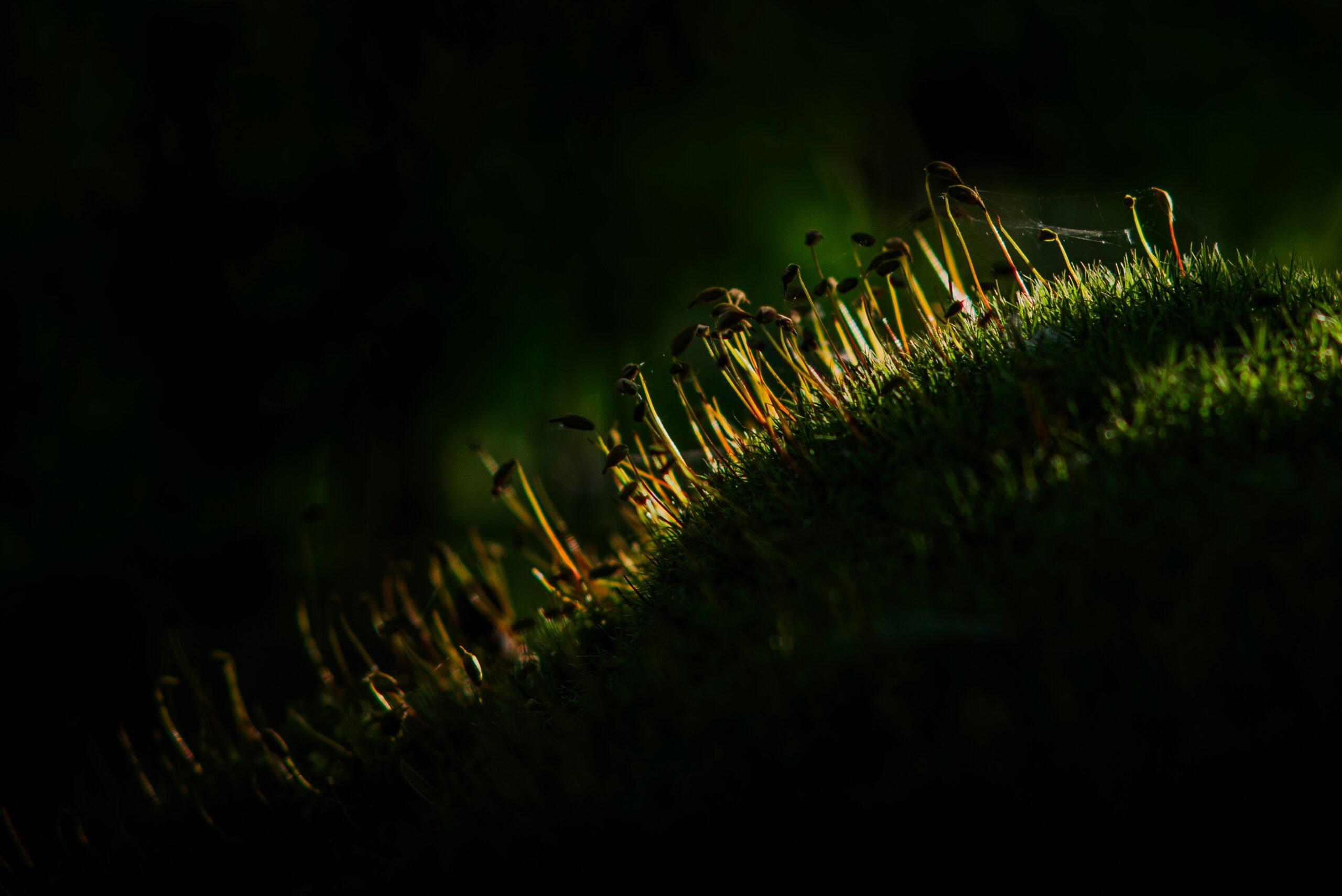
I visited the peat bog just before dawn, when the morning fog was still heavy, hovering over the carpet of peat like a damp blanket. Earlier that morning, I’d noticed peat dried and nailed to the windowsills of most of the stone cottages in town as I wandered the nearly empty streets.
“Keeps the bugs out,” a woman setting up a produce stall said when I asked, interrupting her as she arranged root vegetables in wooden crates. “And…” her gaze drifted away from me, back to her work as she muttered, “other things.”
At the bog, the wooden boardwalk that crossed over the soft peat creaked under my boots, the damp wood smelling faintly of rot and moss.
“Best time to see it, best time,” the Innkeeper told me the night before as I sat at the inn’s bar drinking lager. “Want to be there right at dawn. That’s when you’ll see some things. That’s when the bog comes alive.”
He’d pointed to an ancient portrait, darkened with age on the wall. It was of a regal-looking gentleman, his face pale in the dim light, eyes and cheeks sunken, making him seem almost corpse-like. Come to think of it, there was a strong resemblance to the Innkeeper.
“Me ancestors discovered that bog, and what it could do. They built this town around it, you know, stone by stone. We were royalty once,” he added haughtily. I looked closer at the portrait. There was a small crown on the man’s head, and in his hand, a scepter? No, a bone. “None of this would be here without my ancestors’ sacrifices. That’s for sure.”
That evening, after I visited the bog, I returned to the bar. Like the night before, there were a dozen or so locals scattered around the room, older men, sitting quietly in groups of three or four, though one table held a raucous group of middle-aged women, who spoke excitedly and broke into cackles that rose, piercing the din. A fire crackled in the old cooking hearth, the light dancing off the worn paneling and rafters. The Innkeeper brightened when he saw me. I was still a novelty; I suppose. Someone new to tell old folktales to. “You were right,” I said to the Innkeeper. “Dawn was the best time.”
“I told ye. Did ye see the hands?”
“Funny thing about the hands,” I said, straddling a barstool. “You didn’t tell me they’d be reaching out of the bog.”
“Didn’t I? No, I’m sure I did. First thing we tell all the tourists is about the hands.”
I shook my head slowly.
“No. No one mentioned them,” I said. “It’s all right, though. They were friendly enough.” Though now that I thought about it, one of them had very sharp nails.
The Innkeeper put down the glass he was polishing. “Ye didn’t touch ‘em did ye? Not the bog hands.”
“Well, they were reaching like they wanted to climb out. Seemed rude not to at least help.” Honestly, I didn’t understand why no one had given them a hand years ago. I know if I’d fallen into the bog, I’d want someone to pull me out, dead or not. But, I didn’t want to offend, so instead I asked, “Can I get a pint of lager?”
The old man didn’t hear me. He just stared. His skin grew as pale as the portrait of his ancestor.
“Ye pulled ‘em out?” The surrounding conversations suddenly stopped, the room growing quiet, save for the crackling fire.
“Only a couple. Just the ones nearest the boardwalk.”
He let out a long sigh.
“Oh, that’s okay then.” Relieved, sounding chuckles rippled through the room as conversation resumed. “Those were the children. Harmless them. Raised to be sacrificed. I suppose they took one look at the world nowadays and dove back in.”
“No,” I said. “Not exactly. They wanted me to follow them.”
“Follow! Did ye stray off the path?” Chairs scraped sharply against the wooden floors as a handful of old men stood. Were they scowling at me? They hurried to the exit, slamming the front door so hard the bell jangled riotously, the stained glass rattling in its frame. “Ye can’t cross the bog boundaries. That’s rule number one. Now, I know I told ye not to step off the path.”
“No, you didn’t. And yes, I did. It wasn’t far,” I said. “Just through the trees and up a ridge into this circle of stones. Now about that lager?”
“The stones with the signs saying, ‘Danger! Stay Back?’”
I furrowed my brow, thinking of that morning when I held the eager child’s desiccated hand as she led me up the rocky hill. Her friends, their skin and clothes appearing tea-stained from centuries in the bog, encircled me, gently guiding me with their tiny hands. At the top, the trees gave way to a barren ridge with a circle of stones that looked very much like a smaller version of Stone Henge crowning the hilltop.
“You know,” I said, thoughtfully. “I did see a sign like that now that I think about it. Though I don’t know what all the fuss was about. There was a delightful bunch of fellows inside the stones who said they’d been dying to see a living soul for centuries.”
The raucous women grew quiet, hastily gathering their belongings, wrapping colorful homemade scarves round their necks, and large sack-like purses over their shoulders, before bustling away. Was it close to closing time?
“Those were the Bloody Band of Warriors.” He bent over and began rummaging beneath the bar, bottles frantically clinking as he searched for something.
“Bloody? No, not bloody so much, unless…” I pictured them seated in the center of the stones, large axes and shields strapped to their backs, and the way their furs and leather garments unfurled as they stood to greet me, “Well, they were covered in dark brown stains, but I just assumed it was mud or something from the swamp.”
“Bog.” The bell rang again as more patrons left, the door closing behind them with a slow creak.
“Yes, bog, whatever you say. They said they’d been waiting ages for a chap like me to venture near enough to give them directions into town. Apparently, they needed a guide because of the darkness, or maybe it was the light? Something like that.”
The Innkeeper’s hand appeared, slamming down a small, crumbling cardboard box on the bar. I leaned forward, lifting the lid with a fingertip. Red shotgun shells.
“A living guide,” the Innkeeper said, slowly reappearing, “to take them out of the darkness and into the light.”
The last of the patrons, an old bow-legged man, stood up, donning a tweed flat cap.
“Good luck, Samuel,” the man said, tipping the brim of his cap toward the Innkeeper as he left.
“Um, it is closing time?” I asked.
The Innkeeper ignored the question, just as he’d been ignoring my drink order.
“And did ye? Guide them, I mean?”
“Well, it seemed the polite thing to do and the children–”
“The dead children,” he cut in. The Innkeeper turned away, reaching for the top shelf behind the bar, where the oldest, dustiest bottles were collected. From behind them, he pulled a long and rusted shotgun.
“Yes, fine. The dead children wanted me too. I wish you had told me what wonderful chaps there were out there. I would have brought some snacks or a pint. It looked like a very long time since they’d had any, you know.”
“Ye mean, you left them there?” The Innkeeper put a hand on his chest and laughed. “You’ve been giving me a right scare tonight! But, so long as they’re still there.”
“No!” I laughed. “That would have been rude!” What was it with this town and not helping people? I gestured toward the entrance. “They’re coming just behind me. You know, I should buy them all a pint.” The Innkeeper looked toward the door, where hulking shadows passed across the stained-glass windows.
“They’re outside?” he asked, reaching for the shotgun casings and shoving them in his apron pocket.
“Of course! And I told them all about you. How your ancestors built this village and sacrificed so much to help it prosper. And you know they told me they knew your great-great-whatever-grandfather and were keen to meet you. Hold on, let me call them in. You’re going to love these fellows.” I slid off the stool and started toward the door, but stopped halfway. “Now, about that lager?” I said, but when I turned, the Innkeeper and his shotgun were gone.
The bar was empty now, save for the portrait. Funny, it felt like it was watching me now. A shotgun blast rang out somewhere in the dark, followed by the thunder of running feet on cobblestones and a chorus of war whoops as more shadows passed over the glass. I hesitated, just for a second. Maybe I shouldn’t open the door.
“You know,” I muttered to the portrait as I backed away from the entrance, “I think I’ll get my own pint.” I slipped behind the bar, reaching for a mug. The fire popped, the portrait glared, and the door creaked open, the bell jingling, bright and cheerful, as the smell of earth and bog rot drifted in.