By Caitlin Taylor So
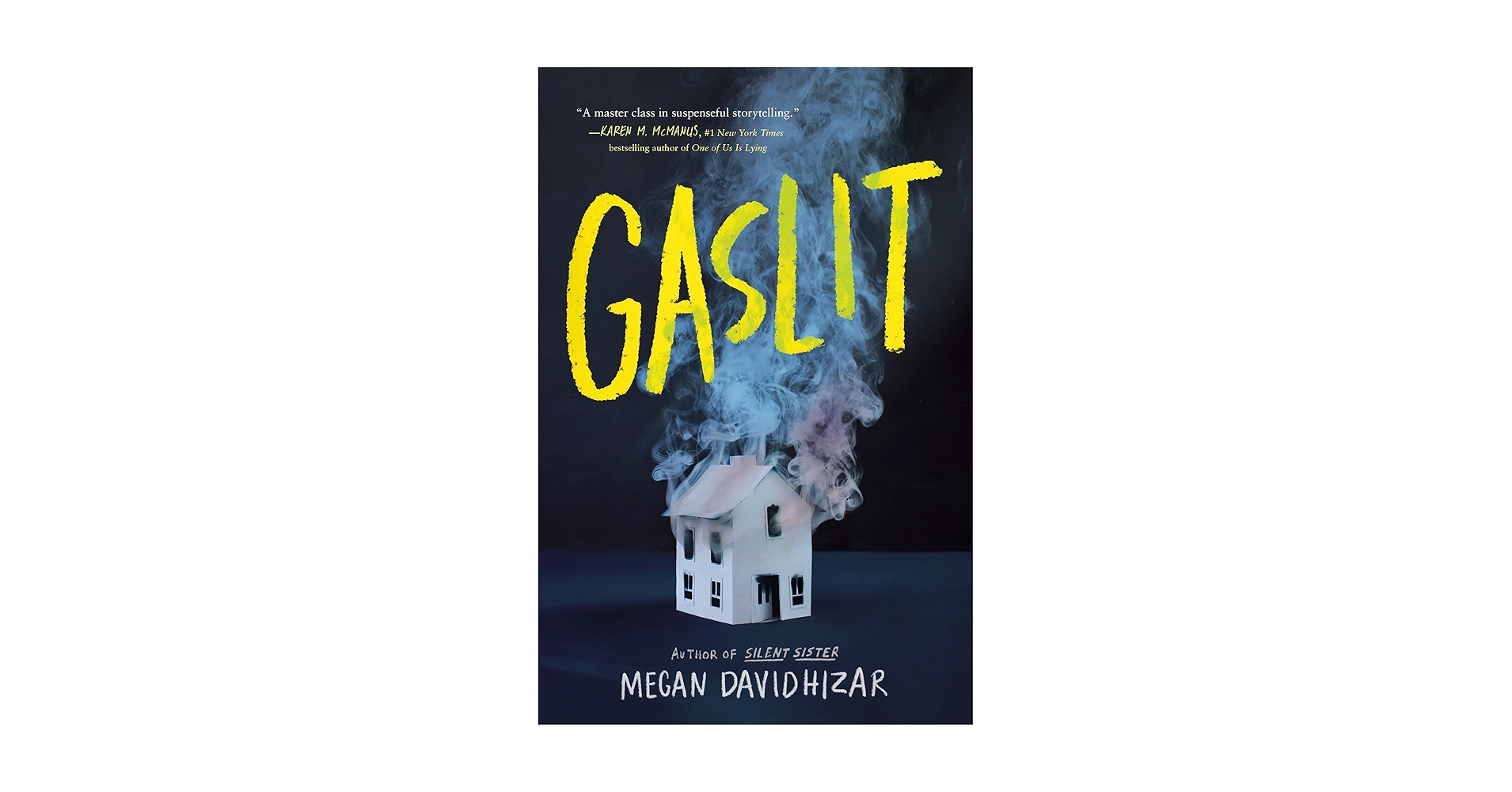
I was delighted to get in touch with Megan Davidhizar to start the new year with a conversation about her latest YA psychological thriller, Gaslit, which comes out today!
It starts with a headache. Ella was supposed to spend time with her friends like a normal seventeen year old until a crippling headache leads to a brain tumor diagnosis. She decides to spend the night babysitting instead, but when she gets to her cousin’s house, something is immediately off with the door open, no lights turned on, and a concerning smell coming from inside…
It’s a gas leak, leaving her aunt and cousins unconscious. In the aftermath of this tragedy, Ella’s symptoms worsen, blurring her perception of reality versus imagination. As time goes on, she simply can’t shake the feeling that the gas leak was no freak accident and that whoever is responsible is out to get her next.
Want to find out how this twisty tale ends? Look for Gaslit wherever books are sold and keep scrolling to read my interview with Megan Davidhizar!
CAITLIN TAYLOR SO: Gaslighting as a term has been used more often and more casually as of late. In your own words, how would you define gaslighting as it appears in Gaslit? Would you differentiate or modify your definition as it pertains to gaslighting from medical professionals versus the ways in which we can internally gaslight ourselves? How did you balance portraying gaslighting in your story (and how different it can look depending on who’s involved) with taking part in the gaslighting yourself to your readers (through Ella as an unreliable narrator)?
MEGAN DAVIDHIZAR: Gaslighting in Gaslit refers to the act of making someone doubt themselves, whether purposefully or not.
Ella is gaslit by a doctor in her past who had her doubting the severity of her symptoms and condition. She is also gaslit by other characters, and she even gaslights herself, making herself doubt what she believes to be true.
The original definition stems from a movie where a husband uses old gaslights to convince his wife she is losing her sanity, and as language so often does, the term has morphed to almost be synonymous with lying or manipulating. In Gaslit, I wanted to explore the different shades of this word, and yes, have readers feel gaslit themselves.
CTS: Where did the inspiration for Gaslit come from?
MD: Shortly after we moved into our house, two neighbors shared stories of having carbon monoxide leaks and feeling lucky to be alive. The idea of an invisible threat haunted me, because it feels like we are more vulnerable to dangers we can’t see. Gaslighting and gas leaks seemed the perfect pair, and as the story developed, I found even more invisible things for Ella to fear.
CTS: I read that before you wrote mysteries, Gaslit being your second published YA mystery novel, you wrote fantasy. How would you compare your approach to building worlds in fantasy to building suspense and an atmospheric sense of dread and unease in mystery? Did your experience writing fantasy first provide you with foundational knowledge for writing Silent Sister and now Gaslit? Would you ever explore an opportunity to combine these two genres in a future story?
MD: While I was writing fantasy, I remember reading an article about Neal Shusterman who said he needed to learn how to write about people before he could add science fiction elements. At the time, I bucked against the advice, because I so badly wanted to be successful in writing fantasy.
As it turns out, Shusterman was right. I was much more successful when I focused on developing tension without magic and digging into characters’ emotions. I have always been fascinated by the mind and the way it can play tricks on us, and my favorite scenes to write are when characters have realizations about their own minds deceiving them. I still love fantasy, and I would love to see more genre blending—has there been an unreliable narrator in fantasy?—but for now, I am happy to stay in the real world.
CTS: As an English teacher yourself, did you have a hand at crafting the Educator Guide in the back of the book? For students and aspiring mystery writers alike, what classic mystery books would you recommend that truly epitomize the genre?
MD: Yes! I approached my editor with the idea for Silent Sister because I thought it would be fun to apply some of my favorite teaching activities to my own book, and when Gaslit was finished, she asked if I’d be willing to create another one. I was thrilled!
While Sherlock Holmes and Agatha Christie are of course classics for mysteries, I also love short stories like “The Landlady” and “The Yellow Wallpaper.” The latter, especially, unlocked my love of an unreliable narrator.
CTS: Does watching thriller movies inform or shape your writing at all? What are some of your favorites?
MD: I am notorious for preferring books over movies, though I have gotten into true crime documentaries and podcasts over the last few years. I especially enjoy Crime Junkie, hosted by my fellow Hoosier Ashley Flowers.
CTS: What can readers expect from you next after Gaslit?
MD: While I can’t say too much yet, I am really excited for my next writing opportunity. For years, teachers and librarians have lamented the gap in publishing for books with characters ages 13-15. I’m excited to help fill that hole with my third book!
***
Megan Davidhizar is the author of Silent Sister and Gaslit. She grew up moving around the Midwest and graduated summa cum laude from Purdue University. She now spends her mornings wishing she liked coffee, her days learning from the students in her English classroom, and her evenings reading stories to her three children while her husband tries to convince them the movies are better. Miraculously, they are still happily married.
Purchase Gaslit here.
Born and raised in Queens, Caitlin Taylor So is a Chinese-Vietnamese writer who is passionate about prioritizing and amplifying marginalized voices. She graduated from Emerson College with a degree in publishing and marketing. Her writing can be found on Business Insider, PopSugar, WebMD, Medscape, The New Absurdist, and Her Campus Media.